
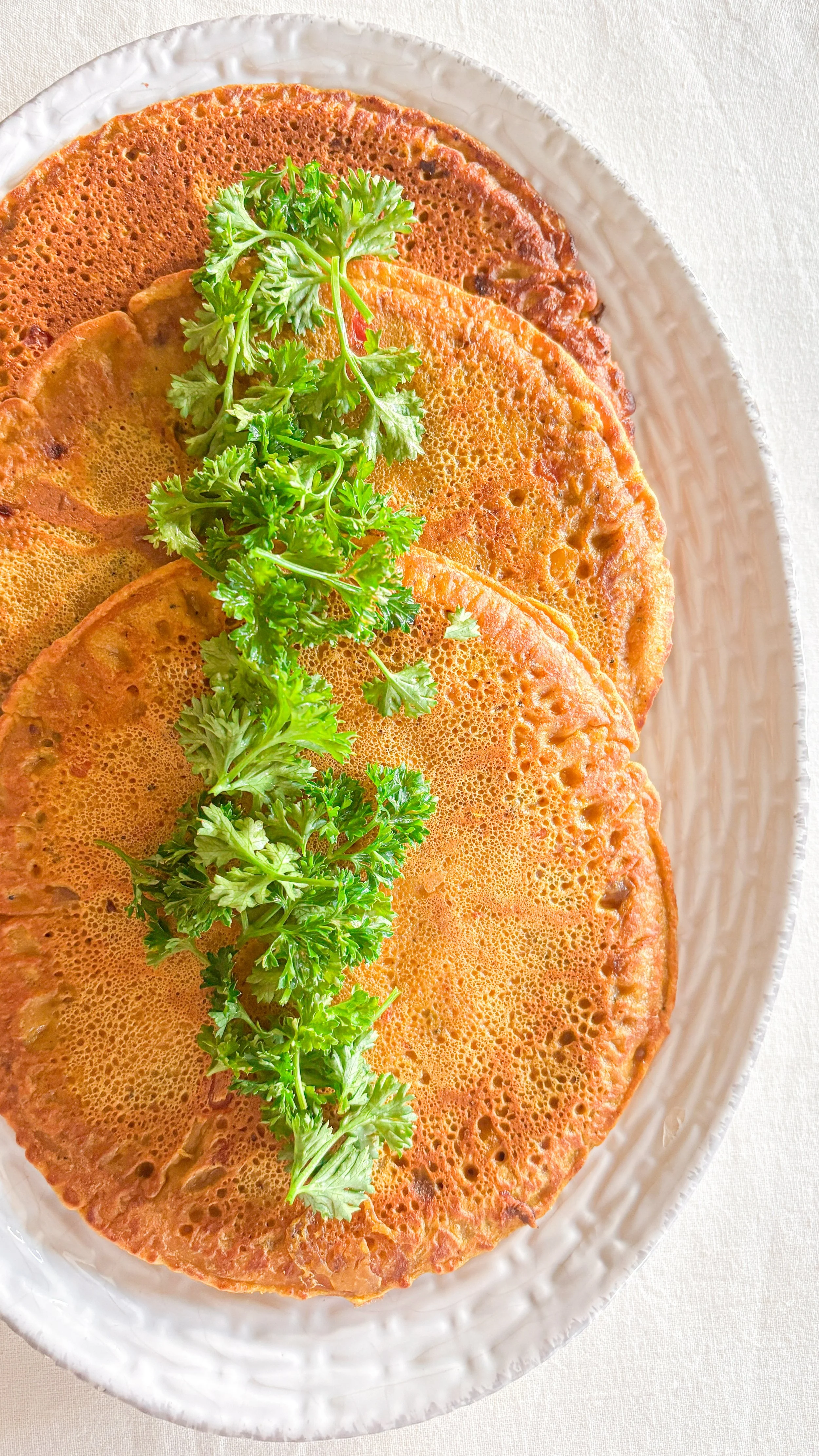
Chickpea flour omelet (vegan, gluten-free, egg-free)
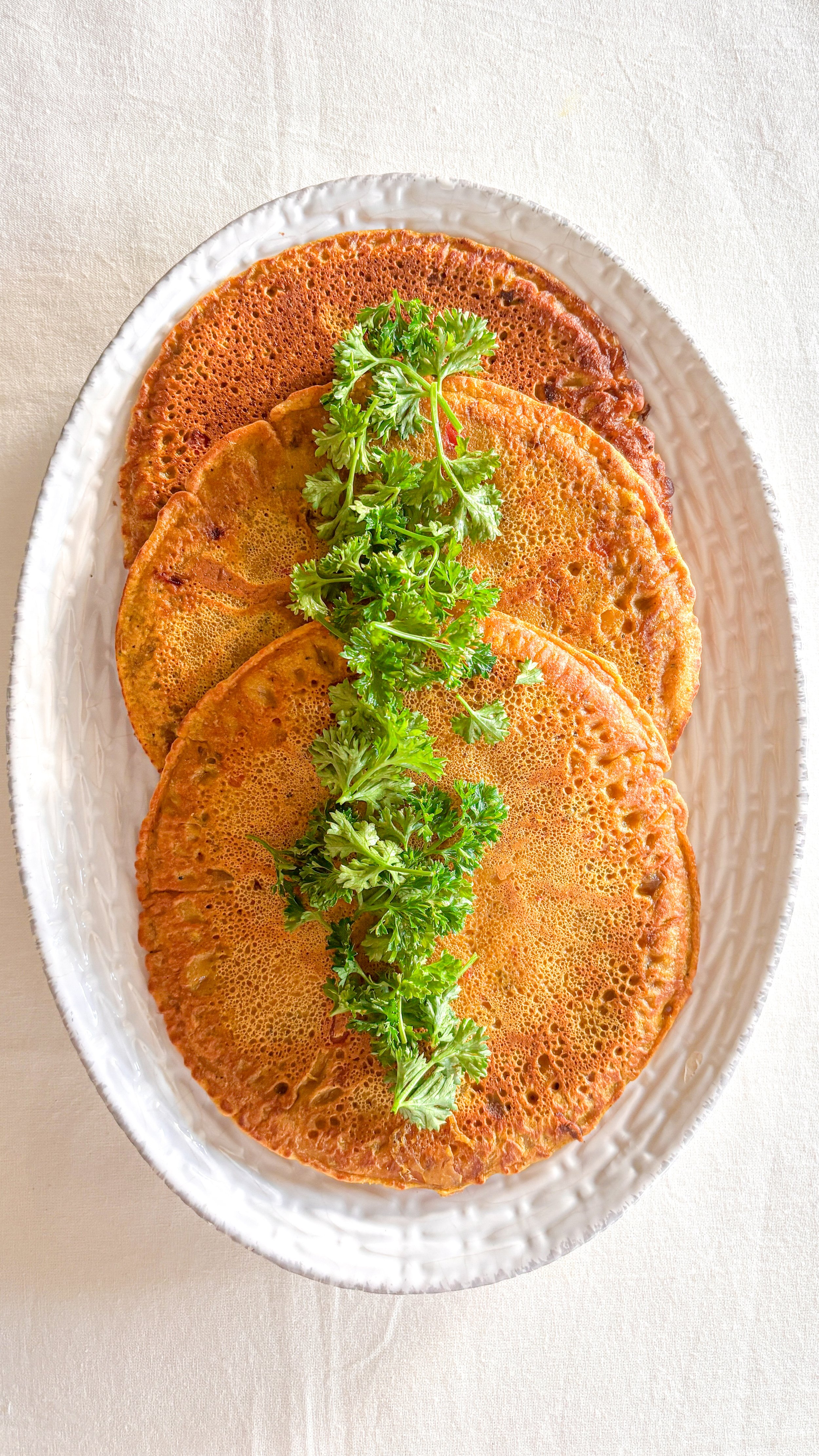
Finding meals that are suitable for food sensitivities can be challenging—especially for women and children. This chickpea flour omelet (also known as a besan omelet) is a simple yet powerful solution. It’s naturally gluten-free, dairy-free, and egg-free, while still offering great flavor, texture, and nutritional value.
Whether you’re managing food intolerances, following a plant-based lifestyle, or simply looking to diversify your meals with wholesome ingredients, this recipe checks all the right boxes.
Besan (chickpea flour) is a nutritional powerhouse. Unlike refined flours, it’s made from whole legumes and provides:
Plant-based protein to support muscle and satiety
Fiber for digestion and blood sugar balance
Iron and magnesium, important for energy and hormonal health
Slow-digesting carbohydrates, helping prevent energy crashes
For women, especially those navigating hormonal shifts or busy lifestyles, meals that stabilize blood sugar are essential. Chickpea flour does exactly that—keeping energy levels steady and cravings under control.
For children, it’s a gentle, nutrient-dense option that avoids common allergens like gluten and dairy, making it ideal for sensitive digestion.
A Great Alternative for Egg Sensitivities! Eggs are a common allergen, especially for kids. This recipe recreates the texture and savory feel of an omelet without using eggs at all. The result is satisfying, filling, and easy to digest—without the inflammatory potential that eggs can cause for some people.
The Magic of Kala Namak (Black Salt) What truly makes this recipe special is kala namak, also known as Indian black salt. Kala namak has a naturally sulfuric, egg-like aroma, thanks to its mineral composition. This gives the omelet its classic “eggy” flavor—without using eggs at all. Beyond flavor, kala namak also:
Aids digestion
Supports gut health
Adds depth and umami to plant-based dishes
It’s commonly used in Ayurvedic and traditional Indian cooking, especially in vegan egg-style recipes.
It works beautifully as:
A quick breakfast
A light lunch
A protein-rich snack
A base for adding meat, eggs, or vegetables if desired
This chickpea omelet proves that you don’t need eggs, dairy, or gluten to create a comforting, nourishing meal. With simple ingredients, clean flavors, and excellent nutritional value, it’s a recipe that supports both health and convenience.
Whether you’re cooking for yourself, your children, or someone with food sensitivities, this recipe offers a delicious, balanced alternative that truly delivers.
RECIPE
Ingredients
Batter
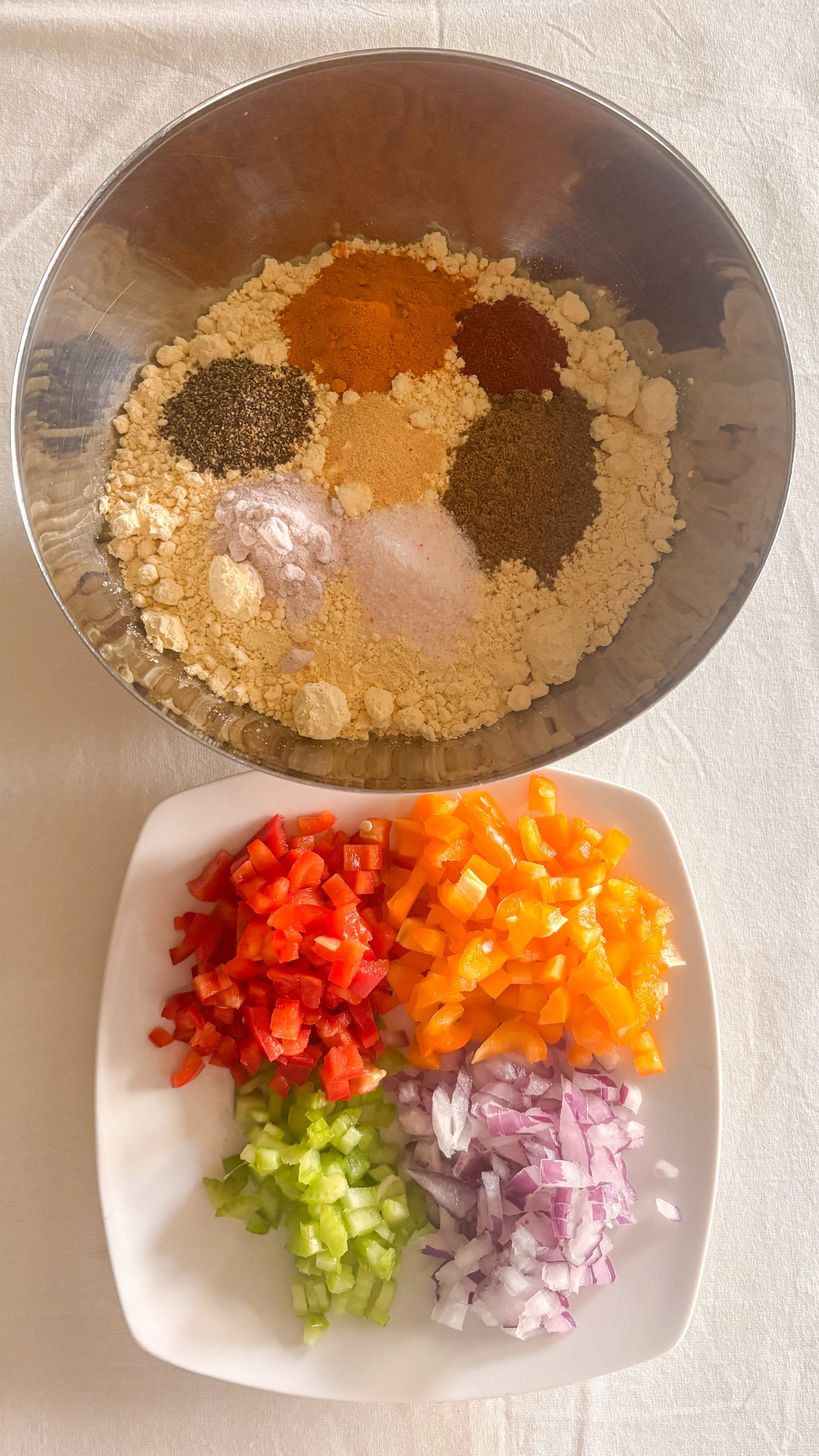
280 g besan (chickpea flour) or lentil flour
480 ml water
1.5 tsp turmeric powder
1.5 tsp cumin powder
1 tsp ground black pepper
1 tsp kala namak (Indian black salt)
1 tsp garlic powder
1 tsp sweet paprika
Vegetables
25 g celery, finely diced
50 g red onion, diced
50 g red bell pepper, diced
50 g orange bell pepper, diced
1 tsp pink Himalayan salt
Other
Fresh parsley, chopped (for garnish)
Avocado oil, for cooking (about 1 tsp per omelet)
Instructions
Prepare the ingredients Measure all ingredients and finely chop the vegetables.
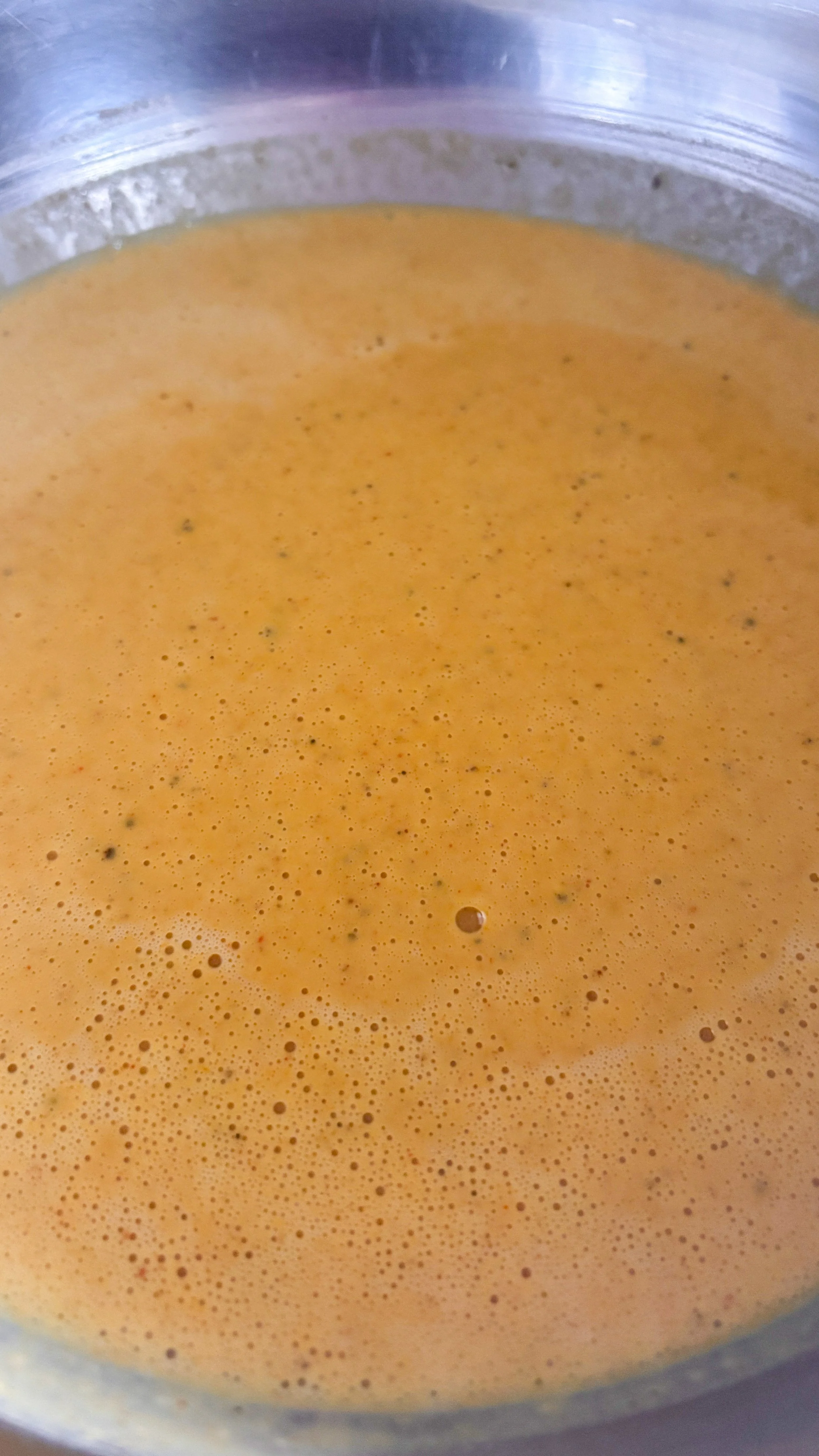
Make the batter In a large bowl, combine the chickpea flour, water, and all spices. Whisk well until smooth and free of lumps.
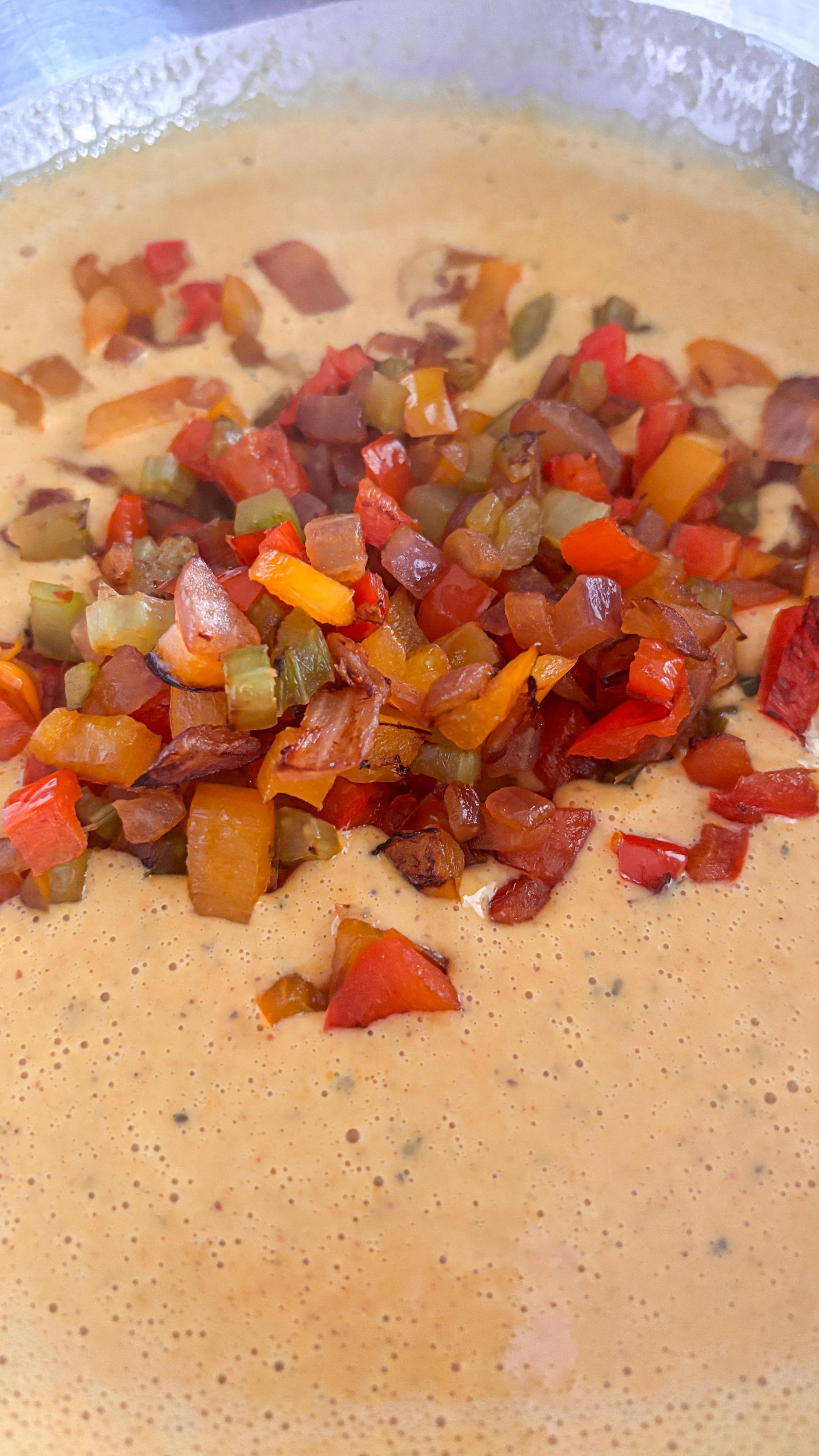
Sauté the vegetables Heat 1 teaspoon of oil in a pan. Add the diced vegetables and salt. Cook for about 8–10 minutes, until softened and lightly golden.
Combine Add the cooked vegetables to the batter and mix thoroughly.
Cook the omelets Heat a 6-inch non-stick pan over medium heat and add 1 teaspoon of oil. Pour in a ladle (about 150 ml) of batter and spread gently into an omelet shape. Cook for about 90 seconds per side, or until golden and set.
Repeat Continue cooking until all the batter is used. This recipe makes 6 omelets.
Serve warm with fresh vegetables, tempeh, tofu, your choice of meat for extra protein, or even topped with fried eggs if desired.
Nutritional Breakdown (Per Omelet) this recipe makes 6: Calories: ~185 kcal; Protein: ~8.5 g; Carbohydrates: ~24 g; Fat: ~6.5 g; Fiber: ~4–5 g
As usual, these are my thoughts and ideas, not medical advice. You are encouraged to create your own recipes or search for some suited to your needs. I am just sharing my recipes, hoping that I can inspire some of you to make healthier food choices.
Please remember that we all have different nutritional needs and that food affects us differently. If you are not sure which foods are best for you, reach out for a free phone consultation.
In good health,
Ioana