
Chapli kabobs (Afgani-Pakistani style beef patties)
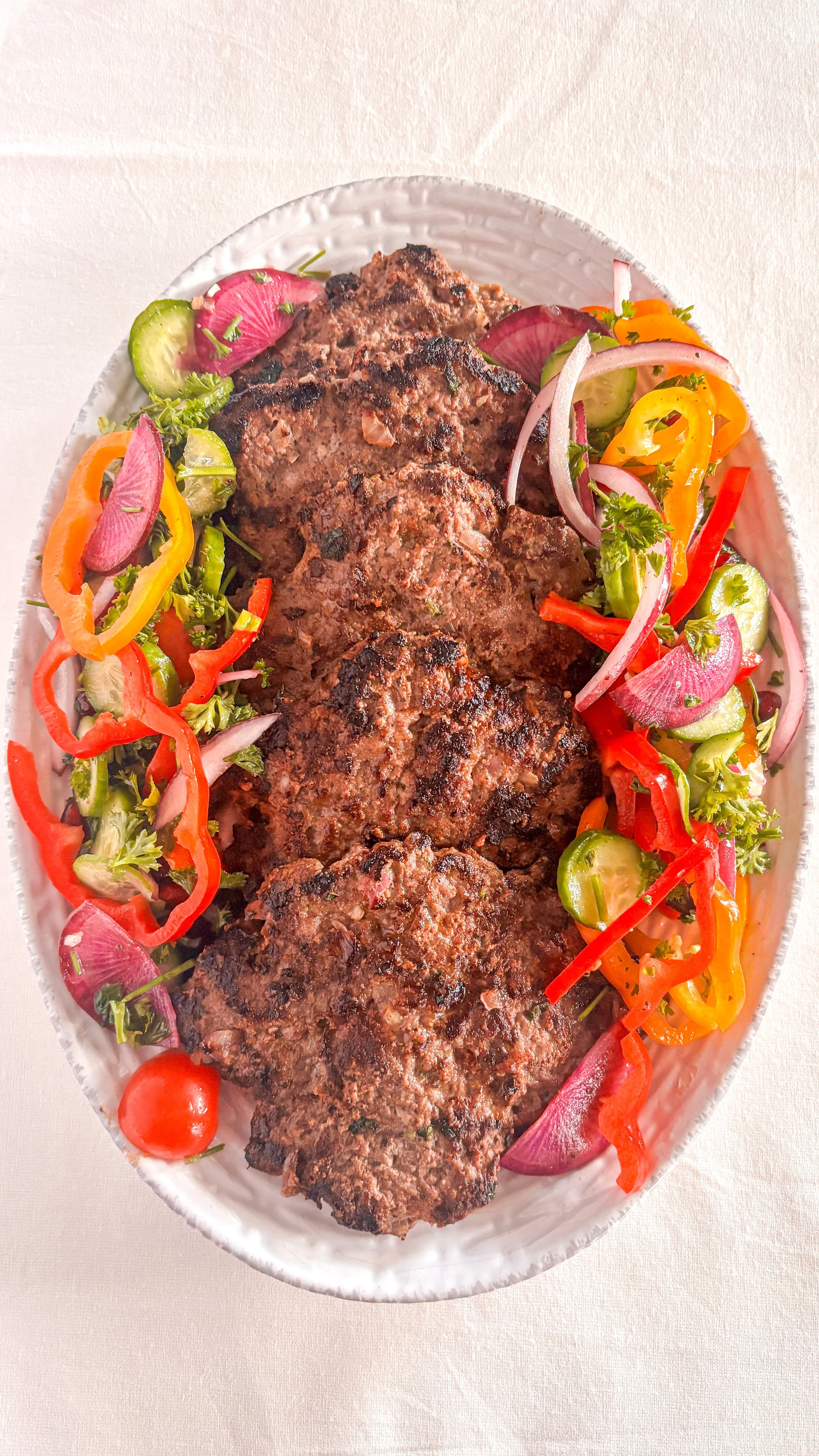
Chapli kebabs are bold, aromatic, and unapologetically satisfying. Originating from the Pashtun regions of present-day Pakistan and Afghanistan, these flattened beef kebabs were traditionally cooked on large griddles and sold as street food—fast and nourishing. Their name is believed to come from the Pashto word chaprikh, meaning “flat,” which perfectly describes their signature shape. What began as a practical, protein-rich meal has earned a place in modern kitchens worldwide—and for good reason.
A short history rooted in nourishment Chapli kebabs were never meant to be delicate food. They were designed to fuel long days of physical work, using affordable cuts of meat, warming spices, and simple binders like chickpea flour and eggs. The spice profile—coriander, cumin, ajwain, garlic, ginger—wasn’t just about flavor. These spices supported digestion, preserved the meat in warmer climates, and made the dish both satisfying and grounding.
Why chapli kebabs are a high-protein powerhouse? At their core, chapli kebabs are built around beef—one of the most bioavailable sources of protein, iron, zinc, and B vitamins. A single kebab delivers a substantial amount of complete protein, making it ideal for:
supporting muscle mass and strength
stabilizing blood sugar
increasing satiety and reducing cravings
supporting metabolic health
The addition of eggs enhances the amino acid profile, while besan (chickpea flour) contributes fiber and minerals without relying on refined grains with gluten. The result is a protein-forward dish that feels indulgent but functions as true nourishment.
For women, adequate protein intake is not optional—it’s foundational. High-protein meals like chapli kebabs can support:
hormone balance by stabilizing insulin and cortisol
energy levels, especially during perimenopause and menopause
iron intake, critical for menstruating women
muscle preservation, which naturally declines with age
Spices such as cumin, coriander, ginger, and ajwain further support digestion and reduce bloating—an often overlooked but crucial aspect of women’s gut health.
Chapli kebabs are a perfect example of how traditional recipes often get it right: real ingredients, balanced macros, and deep satisfaction. When prepared with quality beef and mindful seasoning, they become more than comfort food—they become functional, hormone-supportive fuel.
In a world of overcomplicated “healthy” recipes, chapli kebabs remind us that nourishment can be simple, ancestral, and deeply delicious.
RECIPE
Ingredients
Meat
1,400 g ground beef
Spices to Toast
1 Tbsp ground coriander
1 Tbsp ground cumin
50 g besan (chickpea flour)
1 Tbsp ajwain seeds (or cumin seeds)
Other Seasonings
1 Tbsp black pepper
1½ Tbsp salt
1 tsp chili powder
2 Tbsp ginger-garlic paste
2 Tbsp pomegranate molasses
Fresh Ingredients
3 eggs
30 g fresh cilantro, finely chopped
300 g red onion, finely chopped
Instructions
Prepare the ingredients Measure and prep all ingredients in advance to ensure a smooth cooking process.
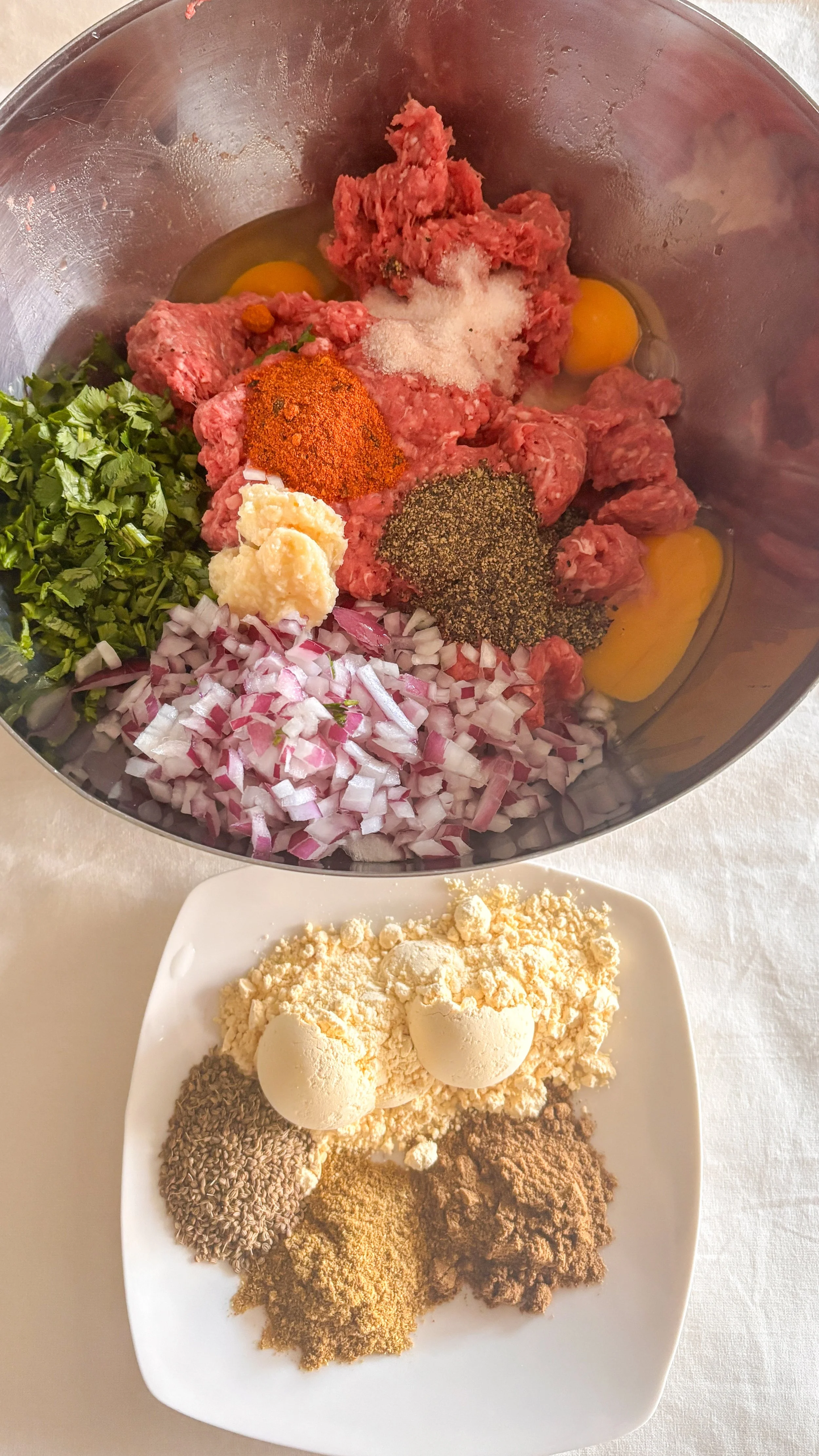
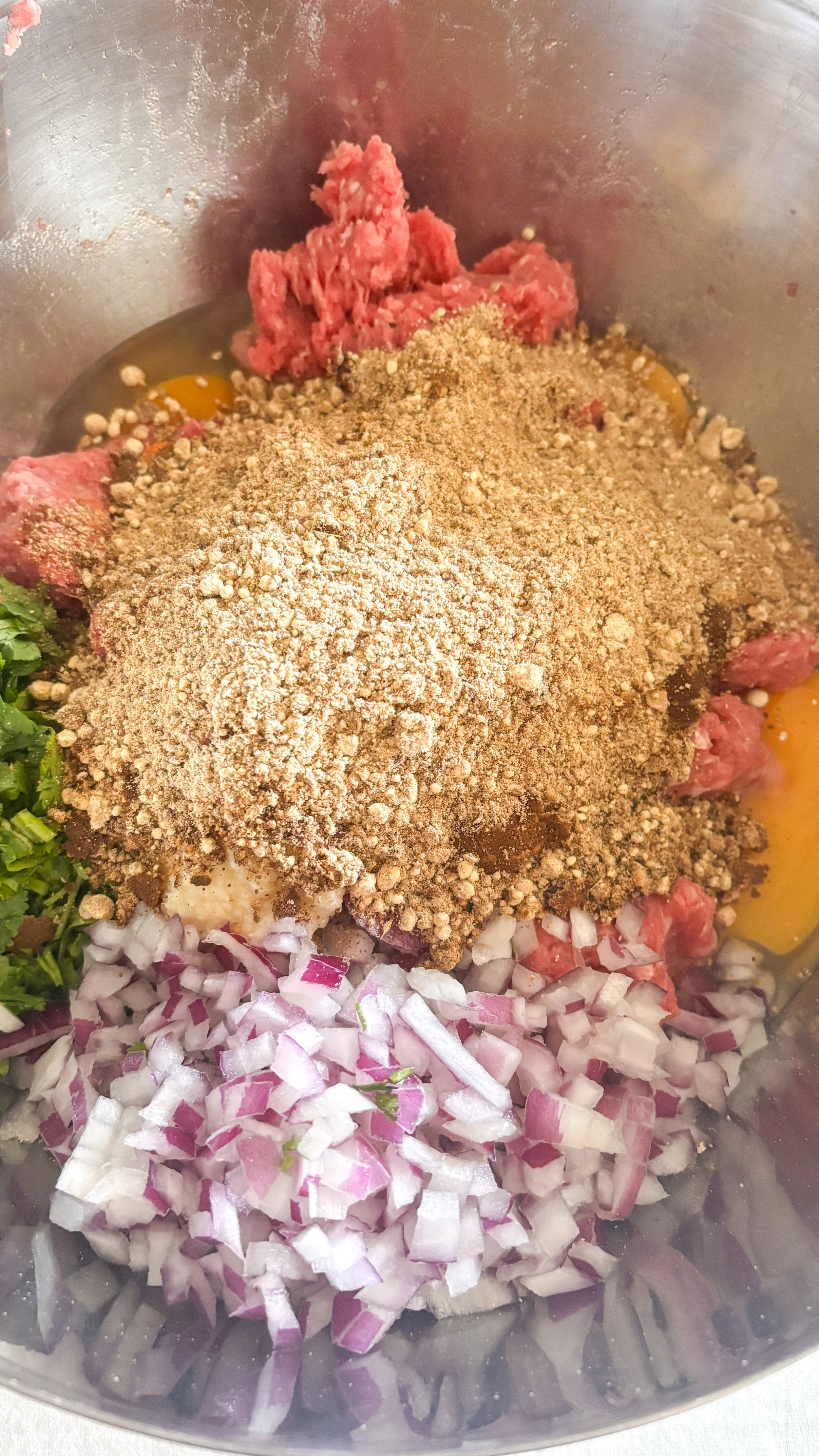
Toast the spices Heat a dry pan over medium heat. Add the coriander, cumin, besan, and ajwain/cumin seeds. Toast for about 4 minutes, stirring constantly, until fragrant and lightly browned. Remove from heat and allow to cool slightly.
Mix the kebab base Place the ground beef in a large bowl. Add the toasted spice mixture, black pepper, salt, chili powder, ginger-garlic paste, pomegranate molasses, eggs, cilantro, and chopped red onion.
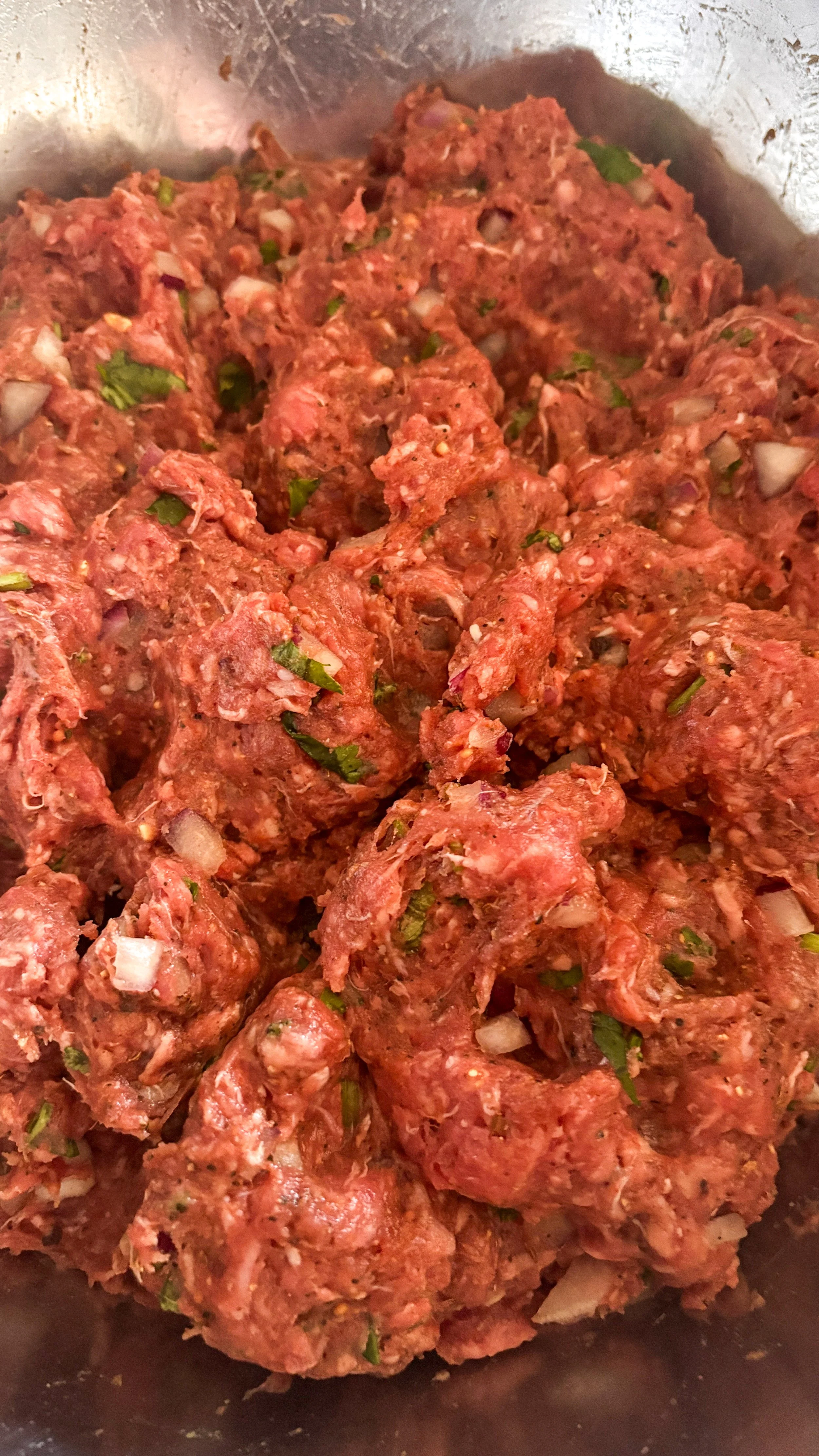
Combine thoroughly Mix well using your hands until the mixture is fully homogeneous and no lumps of flour or spices remain.
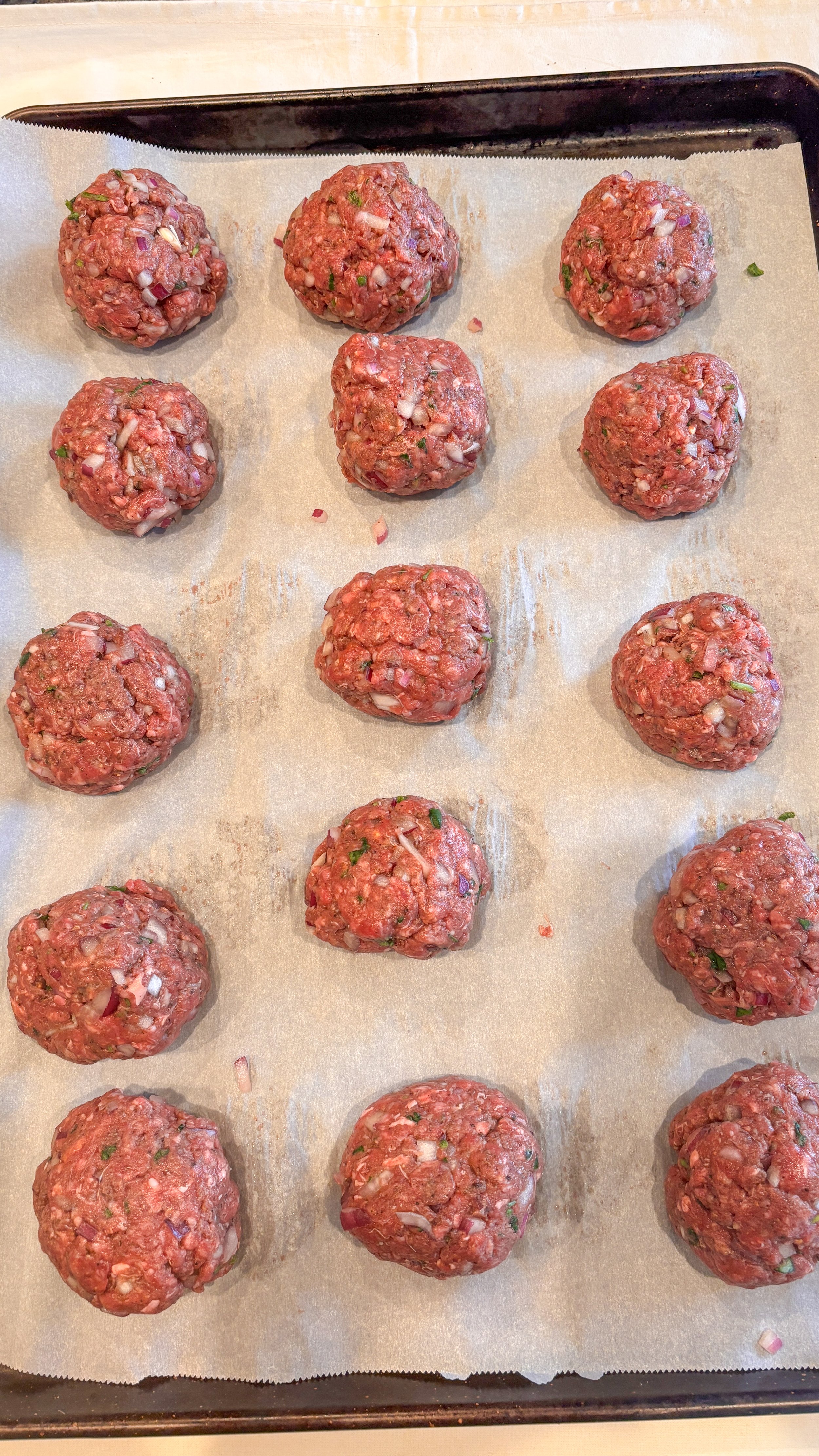
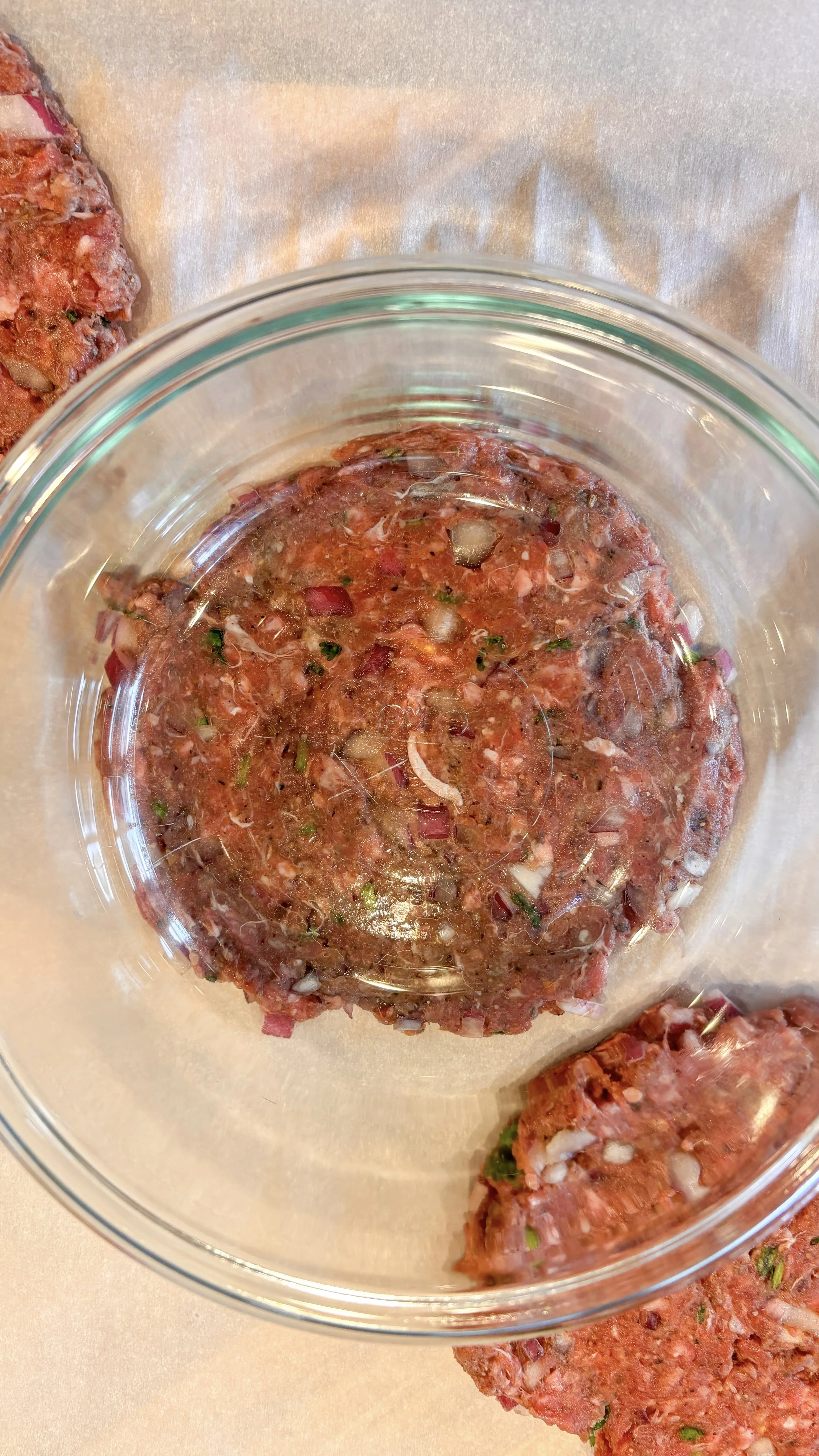
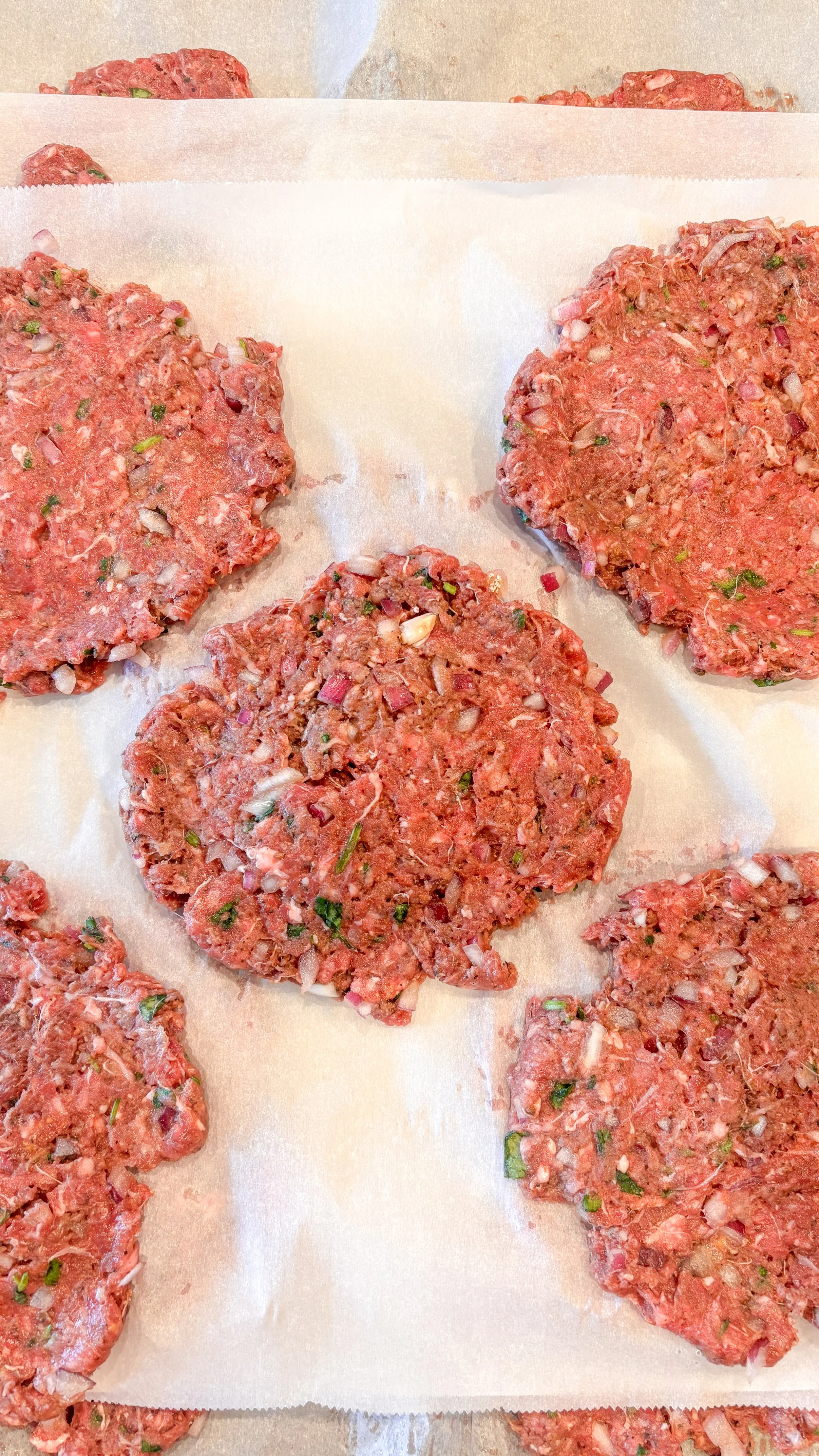
Shape the kebabs Portion the mixture into 100–150 g portions, depending on your preferred size. Roll into balls, then gently flatten each one using the bottom of a glass or container to form thin patties (like shown in the pictures).
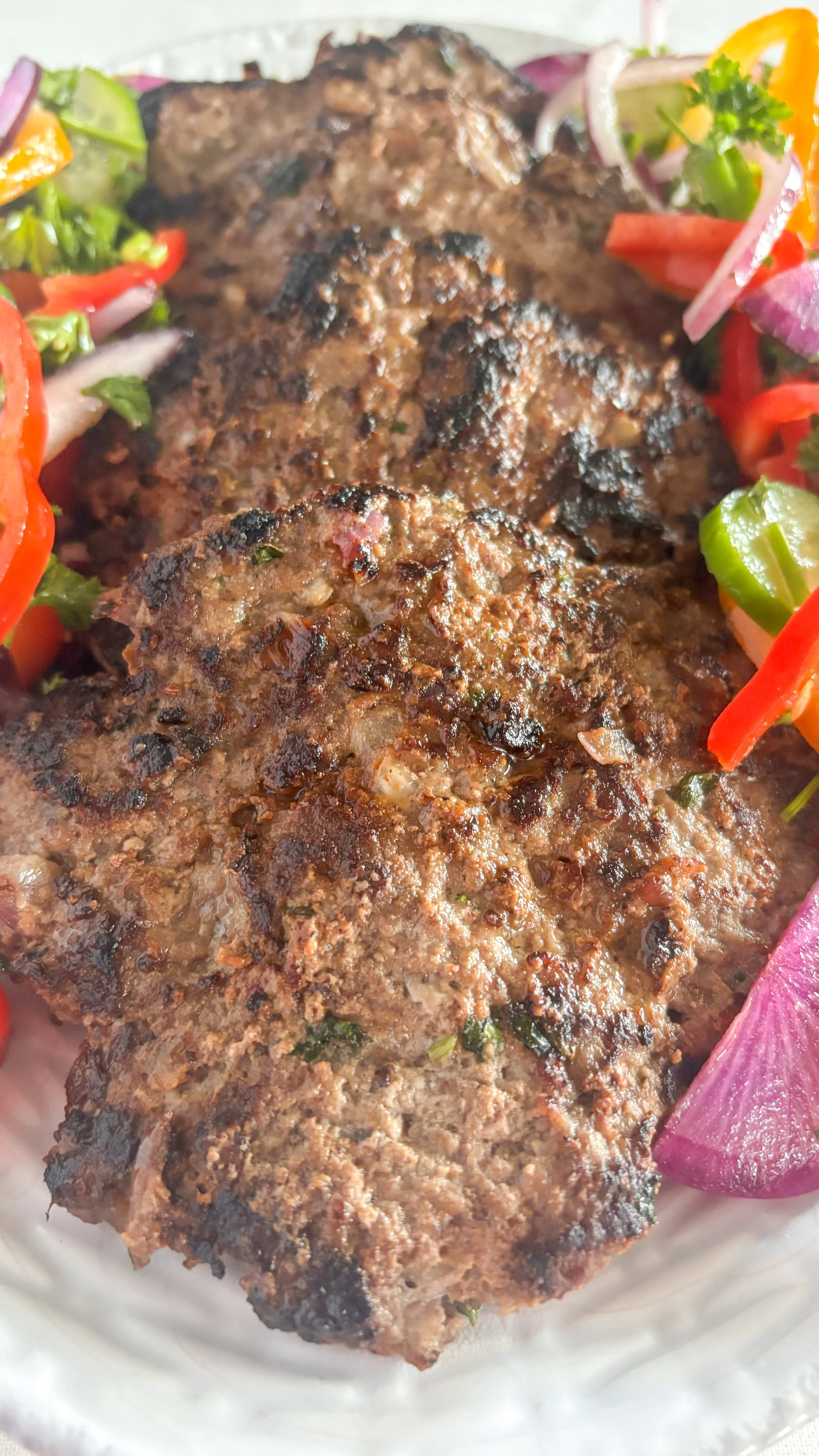
Cook the kebabs Heat a non-stick or cast-iron pan over medium heat. Cook each chapli kebab for 2–3 minutes per side until nicely browned. Avoid overcooking to keep them juicy.
Serve hot with a fresh salad and rice, or alongside gluten-free flatbread and yogurt-free chutney if desired.
Per kebab (15 total) Calories: ~263 kcal Protein: ~23 g
Fat: ~17 g Carbohydrates: ~5–6 g
As usual, these are my thoughts and ideas, not medical advice. You are encouraged to create your own recipes or search for some suited to your needs. I am just sharing my recipes, hoping that I can inspire some of you to make healthier food choices.
Please remember that we all have different nutritional needs and that food affects us differently. If you are not sure which foods are best for you, reach out for a free phone consultation.
In good health,
Ioana